


Call Us : 08045479074

Plastic Welding Rods
180 INR/
Product Details:
X
Plastic Welding Rods Price And Quantity
- 180 INR/
- 100
Plastic Welding Rods Trade Information
- Mumbai
- Cash Advance (CA), Letter of Credit (L/C), Letter of Credit at Sight (Sight L/C), Cash in Advance (CID)
- 10 MT Per Day
- 3-4 Days
- Yes
- Free samples are available
- standard
- All India
- ISO ,ISI,
Product Description
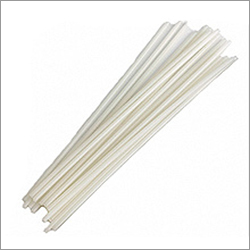
Owing to the years of industrial experience, we are able to manufacture, export, supply, wholesale and trade a wide range of Plastic Welding Rods. Our range is manufactured using premium quality raw material like HDPE, PVC, PP and others. We have an experienced team of engineers, who have vast industrial knowledge that helps them to design these rods precisely. Our range is available in different grades and dimensions suiting best with the requirement of the clients. These rods can be availed from us for various purposes like Metallic pipe lining, Tank fabrications, Pipe leakages and many other maintenance services. The rods offered by us are light in weight that ensures their efficiency in installation. Our range requires less effort for the maintenance. As these rods are manufactured using plastic, they are non-corrosive that makes them fit for optimum utilization in pipeline fittings for various industries. These rods are tested on different parameters before they reach market so that our clients only get the flawless range of rod. Our rods are highly acclaimed for their consistent dimensions throughout the length. Our latest technology machines enable us to manufacture these rods in bulk quantity to meet the demands of our valued clients.
Features Of Plastic Welding Rods:
- Precise designing
- Dimensional accuracy
- Degradation resistance
Product Details Of Plastic Welding Rods:
|
Applications |
Tank fabrications, Metallic pipe lining, Fabrication of Pipe leakages |
|
Usage |
Industrial |
|
Diameter |
3-50 mm |
|
Shape |
Circular |
|
Product type |
Welding Rods |
|
Material |
PP, HDPE, PPH & PVC |
|
Density |
0.98 |
Versatile Applications
Plastic Welding Rods are perfect for a broad spectrum of repair and fabrication needs. From automotive bumper fixes to industrial plastic tank restoration, these rods bond seamlessly with thermoplastics like PP, PE, and PVC. Their high tensile strength and medium to high flexibility ensure durable, reliable repairs every time.
Superior Quality and Performance
Each welding rod is engineered to deliver consistent melting properties between 130C and 160C, depending on the type of plastic. With a smooth surface finish and robust build, our rods support both professional-grade and DIY applications, providing long-lasting results in demanding conditions.
FAQ's of Plastic Welding Rods:
Q: How are plastic welding rods used for repairing thermoplastics?
A: Plastic welding rods are heated to their melting point, then fused with the base thermoplastic material using a plastic welding tool. This process creates a strong bond, effectively repairing cracks or joins in plastic items such as car bumpers, tanks, or containers.Q: What types of plastics are compatible with these welding rods?
A: These rods are suitable for welding and repairing various plastics, including polypropylene (PP), polyethylene (PE), and polyvinyl chloride (PVC). Always select the correct rod type that matches the plastic material you wish to repair for optimal results.Q: When should I choose round versus triangular welding rods?
A: Round rods are generally used for standard repairs and filling gaps. Triangular rods are ideal for corners or where additional support is needed, as their shape allows better distribution of welded material in tight angles or seams.Q: Where can these plastic welding rods be applied?
A: They can be used in a variety of settings, including industrial maintenance, automotive workshops, and for do-it-yourself repairs at home. Their versatility makes them a go-to choice for professional fabricators and casual hobbyists alike.Q: What is the process for welding with these rods?
A: Begin by cleaning the damaged plastic surface. Heat the area and the welding rod to the recommended melting temperature (typically 130-160C). Use a plastic welding gun or hot air tool to slowly feed the rod into the joint or crack, ensuring a secure bond.Q: What are the main benefits of using plastic welding rods in repairs?
A: Plastic welding rods provide a durable and cost-effective solution for fixing thermoplastics. They restore structural integrity, extend the lifespan of plastic products, and minimize the need for replacements, all while delivering a strong, smooth, and seamless finish.Tell us about your requirement

Price:
Quantity
Select Unit
- 50
- 100
- 200
- 250
- 500
- 1000+
Additional detail
Mobile number
Email

Other Products in 'Pipe Welding Solutions' category


Contact Details

- 126/1 & 125, Rajrajeshwari Compound, Sonale Village, Nashik Bypass Road,Bhiwandi - 421302, Maharashtra, India
- Phone :08045479074
- Mr Etesh Jain (Proprietor)
- Mobile :08045479074
- Ms. Nikita A (Sales Executive)
- Mobile :08045479074
-
 Send Inquiry
SHREE DARSHAN PIPES
GST : 27AAAHE1478G1ZG
GST : 27AAAHE1478G1ZG
 Send Inquiry
 Send Inquiry
 Send SMS

|


 |
DARSHAN PIPES
All Rights Reserved.(Terms of Use) Developed and Managed by Infocom Network Private Limited. |
