


Call Us : 08045479074
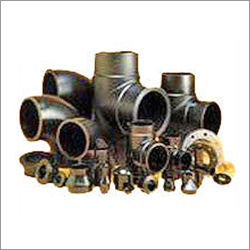
HDPE Pipe Fittings
50.00 - 200.00 INR/Piece
Product Details:
- Temperature Range -40C to +60C
- Coating Type No external coating
- Tensile Strength 16-24 MPa
- Flexibility High
- Diameter 20 mm to 630 mm
- Thread Type Not applicable (mostly fusion welded)
- Yield Strength Minimum 18 MPa
- Click to View more
X
HDPE Pipe Fittings Price And Quantity
- 100 Piece
- 50.00 - 200.00 INR/Piece
HDPE Pipe Fittings Product Specifications
- Other
- IS 4984, DIN 8074/75, ISO 4427
- PE63, PE80, PE100
- High
- 16-24 MPa
- -40C to +60C
- 2 mm to 50 mm (as per specification)
- Smooth, Uncoated
- Socket Joint
- No external coating
- 10 to 20 times the Outside Diameter
- Socket Fusion, Butt Fusion, Electrofusion, Mechanical Joint
- Rubber Gasket/Seal Ring/Heat Fusion
- Minimum 18 MPa
- PN 2.5 to PN 16
- Round
- 1% on dimensions
- 20 mm to 630 mm
- Water Supply, Gas Distribution, Chemical Transmission, Sewage
- Irrigation, Water Supply, Industrial Fluids, Drainage
- High Density Polyethylene (HDPE)
- Not applicable (mostly fusion welded)
- HDPE Pipe Fittings
- 20 mm to 630 mm
- Black, Blue
- Customizable as per requirement
- SDR 11 to SDR 33
- Trenched, Trenchless, Surface Mounted
- Stabilized for outdoor use
- No leaching, suitable for potable water
- WRAS, ASTM D3035 (on request)
- Varies with size, lightweight compared to metallic fittings
- Non-flammable, self-extinguishing
- Resistant to most acids, alkalis and organic solvents
- 0.94 - 0.97 g/cm3
- Excellent
- 100% recyclable
HDPE Pipe Fittings Trade Information
- Mumbai
- Letter of Credit (L/C), Cash Advance (CA)
- 10 Piece Per Day
- 3-4 Days
- Yes
- standard
- Western Europe, Eastern Europe, Africa, Asia
- All India
- ISO ,ISI,
Product Description
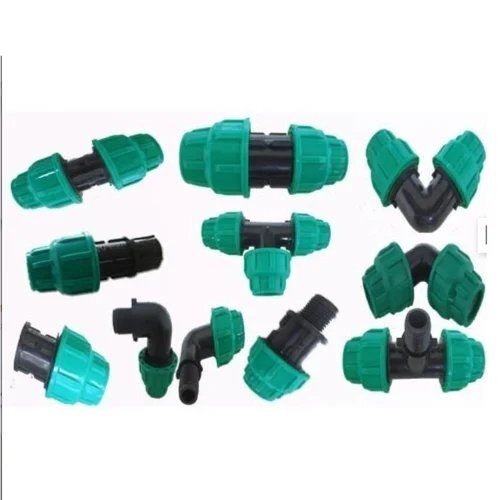
Our Compression Fittings are created from quality material. We test these fittings on different quality parameters to guarantee a faultless range. These fittings are likewise reasonable for drinkable water channeling frameworks as indicated by benchmarks and directions in power in Japan, China, India, United States, Netherlands, U.K., Germany, and Italy.
These Compression Fittings additionally are accessible in different sorts, for example, Coupler, bend, reducer, MTA, tee, end cap, and flange joint.
Product Details Of Compression Fittings:
|
Features |
Jointing/butt welding/fusion welding |
|
Size |
1/2 inch,3/4 inch,1 inch,2 inch,3/4 inch,1 inch,2 inch |
|
Application |
Gas Pipe,Hydraulic Pipe,Structure Pipe |
|
Brand |
Shree Darshan Pipes |
|
Product type |
Fittings |
|
Pressure class |
12 |
|
Pressure |
2.5 bar to 32 bar |
|
Material |
HDPE |
Superior Durability and Strength
Engineered from premium HDPE grades (PE63, PE80, PE100), these fittings deliver a tensile strength of 16-24 MPa and yield strength above 18 MPa, ensuring reliability under pressure and during impact. Designed for hydrostatic conditions (SDR 11 to SDR 33), they meet rigorous standards including IS 4984, DIN 8074/75, and ISO 4427.
Versatile and Environmentally Friendly Solutions
HDPE pipe fittings accommodate applications from potable water supply to industrial fluid transport. The material resists leaching, making it ideal for safe water delivery. With 100% recyclability, low weight, and no external coatings, these fittings support sustainability initiatives while providing ease of handling.
Flexible Installation and Performance
Offering multiple installation options-trenched, trenchless, or surface mount-these fittings adapt to varied site needs. With high flexibility, excellent chemical resistance, and smooth internal bore, they minimize flow resistance and maintenance, supporting operational efficiency in numerous industries.
FAQ's of HDPE Pipe Fittings:
Q: How are HDPE pipe fittings installed in various applications?
A: HDPE pipe fittings can be installed using trenched, trenchless, or surface-mounted methods, depending on site requirements. Typical connection types include socket fusion, butt fusion, electrofusion, mechanical joints, and rubber gasket sealing. These versatile methods facilitate installation in water supply, gas distribution, drainage, and industrial projects.Q: What benefits does HDPE offer compared to metallic pipe fittings?
A: HDPE fittings are lightweight, facilitating easier transport and handling. They deliver excellent impact resistance, superior chemical stability against acids and alkalis, and do not corrode, unlike metal. Additionally, they are non-leaching, making them safe for potable water delivery, and are fully recyclable, supporting environmental sustainability.Q: When is it appropriate to use HDPE pipe fittings for potable water applications?
A: HDPE pipe fittings are ideal for potable water systems whenever safe, reliable, and non-leaching materials are required. They comply with WRAS standards and do not impart taste or contaminants to the water, making them suitable for municipal, industrial, or residential potable water schemes.Q: Where can HDPE pipe fittings be utilized?
A: These fittings are widely applicable in sectors such as irrigation, water supply, sewage systems, gas transmission, chemical processing, and industrial fluid conveyance. Their UV stability and temperature resistance enable dependable outdoor or industrial use across a broad temperature range (-40C to +60C).Q: What is the process for connecting HDPE pipe fittings?
A: Connection methods include socket fusion, butt fusion, and electrofusion welding, as well as mechanical jointing with seals or gaskets. These fusion techniques provide leak-free, robust joints suitable for most sizes and pressures as specified (OD 20-630 mm, PN 2.5-16 bar).Q: How does the UV and chemical resistance of these fittings benefit outdoor and industrial use?
A: The UV stabilization ensures that HDPE fittings maintain their integrity and performance under prolonged sun exposure. Their resistance to most acids, alkalis, and organic solvents allows reliable use in harsh industrial environments and chemical transmission pipelines.Tell us about your requirement

Price:
Quantity
Select Unit
- 50
- 100
- 200
- 250
- 500
- 1000+
Additional detail
Mobile number
Email

Other Products in 'Pipe Fittings' category


Contact Details

- 126/1 & 125, Rajrajeshwari Compound, Sonale Village, Nashik Bypass Road,Bhiwandi - 421302, Maharashtra, India
- Phone :08045479074
- Mr Etesh Jain (Proprietor)
- Mobile :08045479074
- Ms. Nikita A (Sales Executive)
- Mobile :08045479074
-
 Send Inquiry
SHREE DARSHAN PIPES
GST : 27AAAHE1478G1ZG
GST : 27AAAHE1478G1ZG
 Send Inquiry
 Send Inquiry
 Send SMS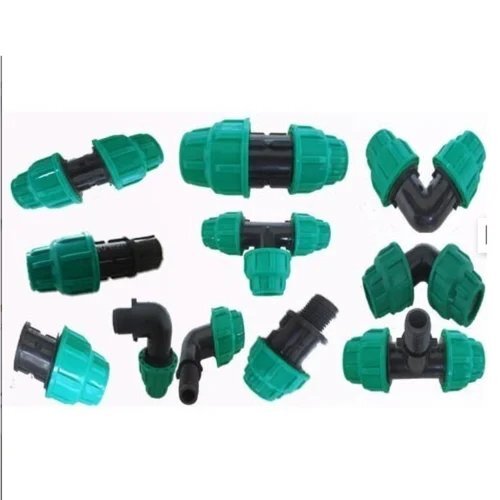

|


 |
DARSHAN PIPES
All Rights Reserved.(Terms of Use) Developed and Managed by Infocom Network Private Limited. |
